Curated by Dr Adrian Tan PC
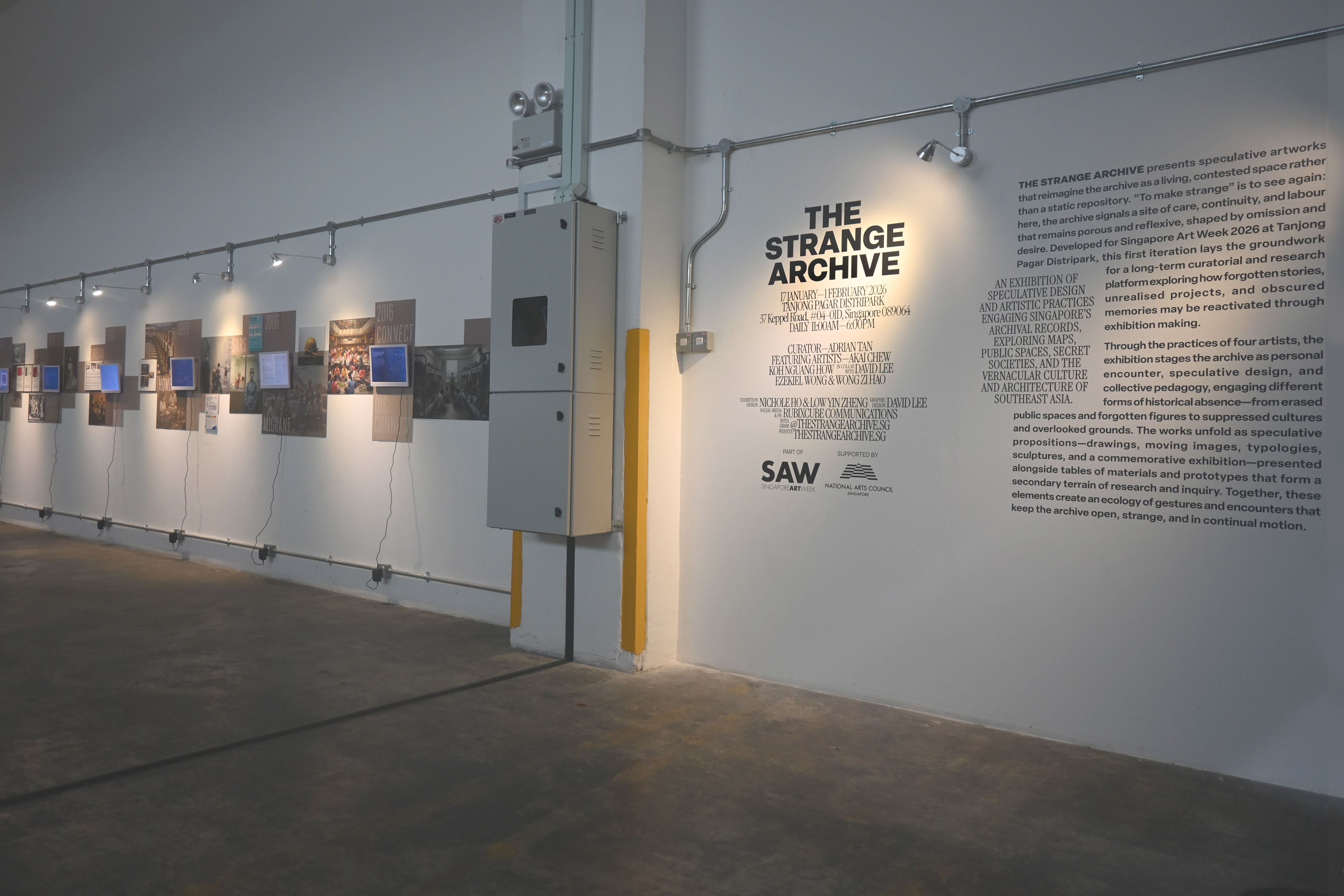
17 January – 1 February 2026
Tanjong Pagar Distripark, 37 Keppel Road, #04-01D, Singapore 089064
Part of Singapore Art Week 2026
17 January – 1 February 2026
Tanjong Pagar Distripark, 37 Keppel Road, #04-01D, Singapore 089064
Part of Singapore Art Week 2026
In Singapore, the archive is often approached as something definitive, a place (or a static repository) where facts reside and narrative stability is secured (and not to be opened till a century later). But in my work, I have encountered the archive as something far more unsettled.
Many of the materials that shape our understanding of art and cultural history ranging from; newspaper articles, photographs, letters, catalogues, oral interviews, bureaucratic records; are inconsistent, partial, or quietly contradictory. They are shaped as much by omission as by intention and authority. The Strange Archive takes this instability and spins it on its head. It proposes that the archive is not “a stable and static repository” but a starting point, a site of speculation, contestation, in need of continual re-reading.
As part of a generation of younger art historians, I see archives not only as sources of information but as cultural artefacts that reflect the desires, anxieties, and institutional priorities of their time. They reveal what was preserved and what was allowed to slip through, often times left untouched unless surfaced as research materials or teaching resources. Much of my research has involved tracing peripheral histories, understanding how artistic communities form, and examining the ways artists respond to the conditions around them. These inquiries inevitably lead back to the problem of the archive: how it frames visibility, how it arranges knowledge, and how it shapes our understanding of art’s pasts and futures.
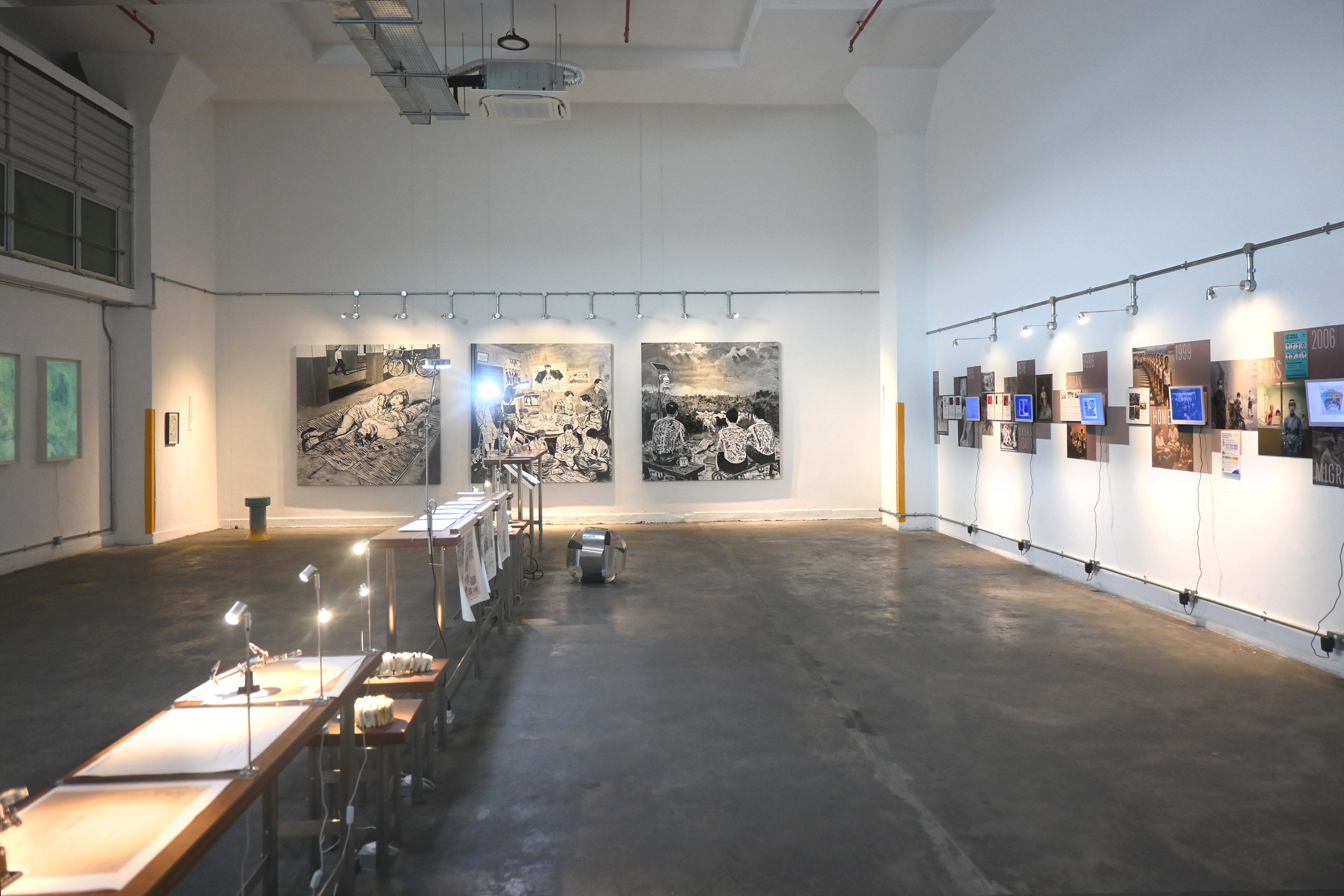
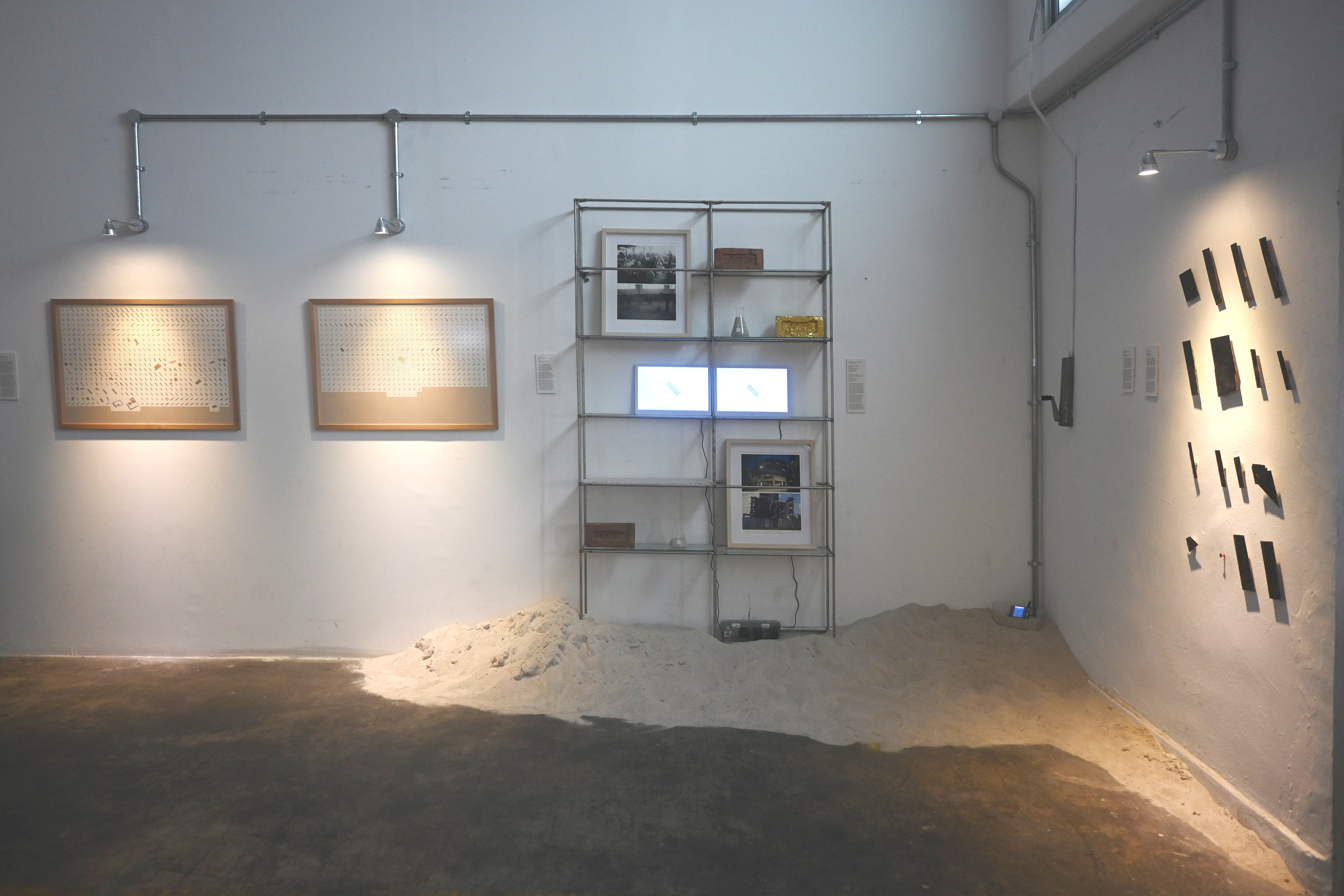
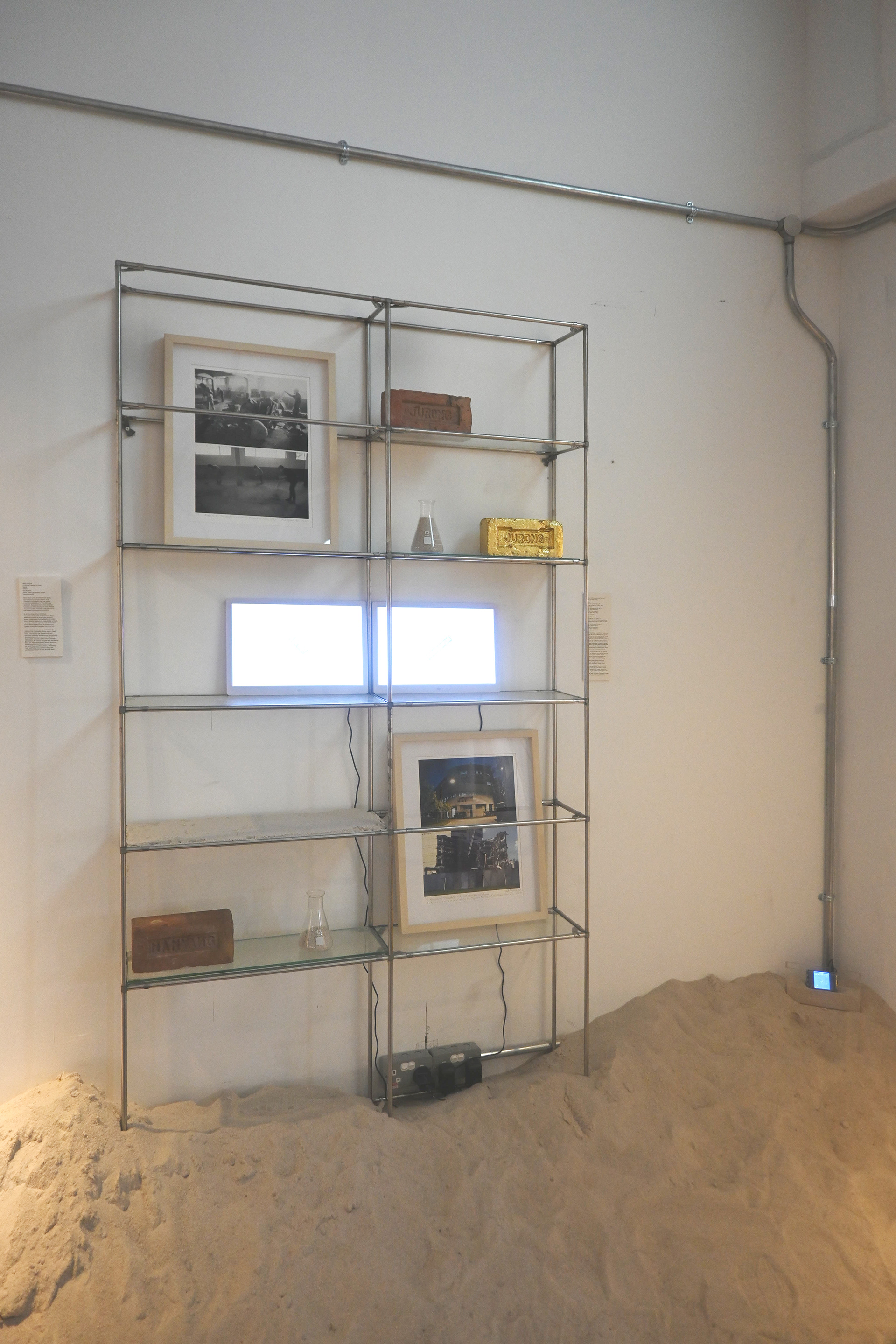
As a curator, I have become increasingly interested in how exhibitions can function as forms of archival inquiry. Exhibitions allow us to stage encounters between fragments that would not ordinarily meet, and to create spatial arrangements that reveal new relationships between history, imagination, and memory. The Strange Archive uses this curatorial space to ask how we might hold multiple truths at once, how the past might be activated rather than merely preserved, and how the speculative and the factual might coexist productively within cultural memory.
The Strange Archive is therefore not a single exhibition but a long-term, evolving framework. It includes artworks, archival research, writing, conversations, and future interventions that explore how histories are continually being rewritten by institutions, by artists, and by everyday acts of remembering. It is shaped by the belief that archives are not neutral storehouses but dynamic, living systems, filled with gaps, contradictions, and potentials. The ongoing research project has only just started where each iteration is an invitation. It invites viewers (and/or visitors), researchers, and communities to think about what we inherit, what we overlook, and what remains possible when we approach the archive not as a closed chapter but as a shifting field of relationships, stories, and desires. It is a call to read again, to listen closely, and to imagine otherwise.
Dr Adrian Tan