The City Of The Future (Lies In Ruins)
2025
Intended size 90 x 60cm (may vary slightly)
UV print on PVC canvas, sewn by traditional canvas maker
2025
Intended size 90 x 60cm (may vary slightly)
UV print on PVC canvas, sewn by traditional canvas maker
The City Of The Future (People's Park Complex)
2025
Intended size 90 x 60cm (may vary slightly
UV print on PVC canvas, sewn by traditional canvas maker
2025
Intended size 90 x 60cm (may vary slightly
UV print on PVC canvas, sewn by traditional canvas maker
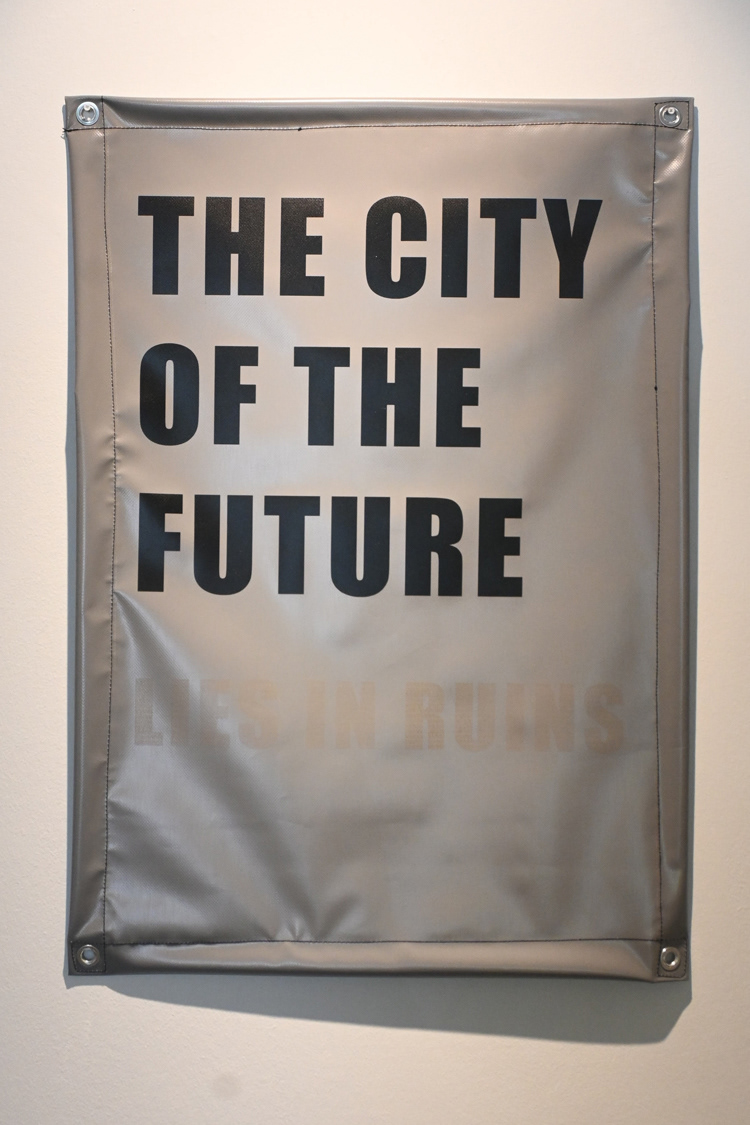
𝘛𝘩𝘦 𝘤𝘪𝘵𝘺 𝘰𝘧 𝘵𝘩𝘦 𝘧𝘶𝘵𝘶𝘳𝘦 𝘭𝘪𝘦𝘴 𝘪𝘯 𝘳𝘶𝘪𝘯𝘴 was a quote attributed to Japanese architect Arata Isozaki responding to his childhood experiences of the destruction of his hometown during WW2, and the transiency of our cities and architecture. In Singapore, demolition is constant. Skyscrapers rise, fall, and rise again. Each act leaves behind questions of real estate, cultural memory, and the ecological weight of building waste.
The words 'lies in ruins' are barely visible, referring to the act of construction and destruction being hand in hand; ie the act of 'creative destruction' whereby creation is only possible after destruction.
The words 'lies in ruins' are barely visible, referring to the act of construction and destruction being hand in hand; ie the act of 'creative destruction' whereby creation is only possible after destruction.
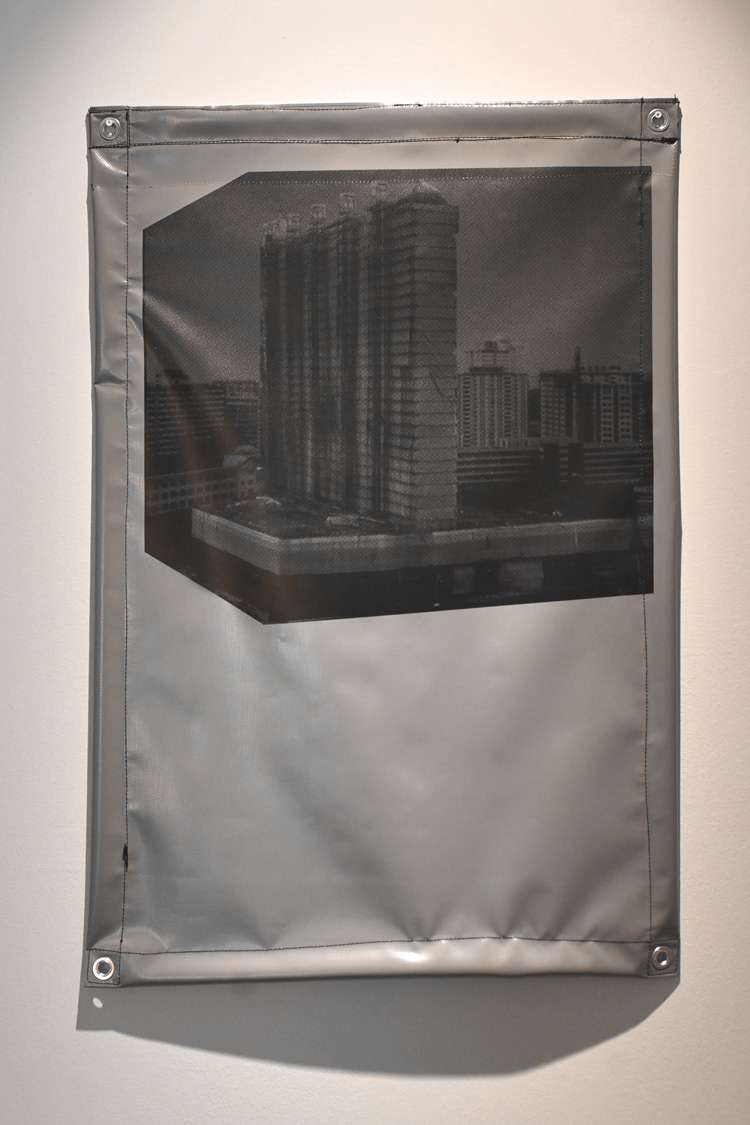
The construction of the People's Park Complex, completed in 1970 marked the first of many mixed use developments that would later characterise Singapore's cityscape. Designed by Design Partnership in the late 1960s, it was a piece of experimental architecture, drawing from the new Japanese Metabolist architecture movements, where a megastructure becomes a node for the community. A highly futuristic architecture for its time, it rose above the deteriorating shophouses of Kreta Ayer. This building captured the urban imaginaries and zeitgeist of the 1960s. As of 2026, the strata owners of the complex intend to sell, and the complex does not have historical conservation status, however efforts from non government organisations are underway to push for conservation status.
Generative digital intervention into archival photograph create an ambiguous image, one which blurs the imaginary between construction and demolition.
Generative digital intervention into archival photograph create an ambiguous image, one which blurs the imaginary between construction and demolition.
The City Of The Future (OCBC Centre)
2025
Intended size 90 x 60cm (may vary slightly)
UV print on PVC canvas, sewn by traditional canvas maker
2025
Intended size 90 x 60cm (may vary slightly)
UV print on PVC canvas, sewn by traditional canvas maker
The City Of The Future (Marina Bay Sands)
2025
Intended size 90 x 60cm (may vary slightly)
UV print on PVC canvas, sewn by traditional canvas maker
2025
Intended size 90 x 60cm (may vary slightly)
UV print on PVC canvas, sewn by traditional canvas maker
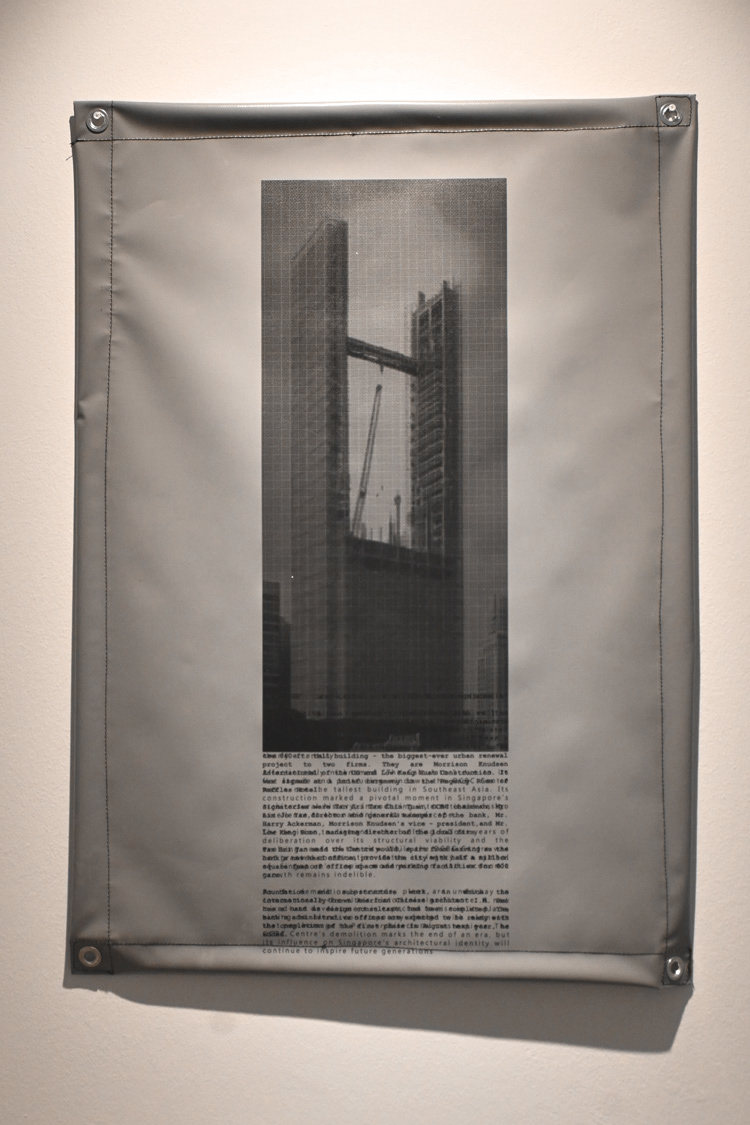
The 1970s in Singapore marked a narrative of increased economic growth, and gradual globalisation. The Oversea-Chinese Banking Corporation commissioned American Chinese architect I.M. Pei to design their new headquarters, an office tower which would be the tallest in Asia outside of Japan. This building was an aspirational architecture, an advertisement that Singapore had reached a global stage. As of 2026, it does not have historical conservation status and demolition is still a possibilty.
Generative digital intervention into archival photograph create an ambiguous image.
The overlaid text are derived from a newspaper article lauding the architecture of the tower, overlaid with a speculative text reporting on the demolition of the tower.
The act of demolition and construction, or creative destruction is blurred.
Generative digital intervention into archival photograph create an ambiguous image.
The overlaid text are derived from a newspaper article lauding the architecture of the tower, overlaid with a speculative text reporting on the demolition of the tower.
The act of demolition and construction, or creative destruction is blurred.
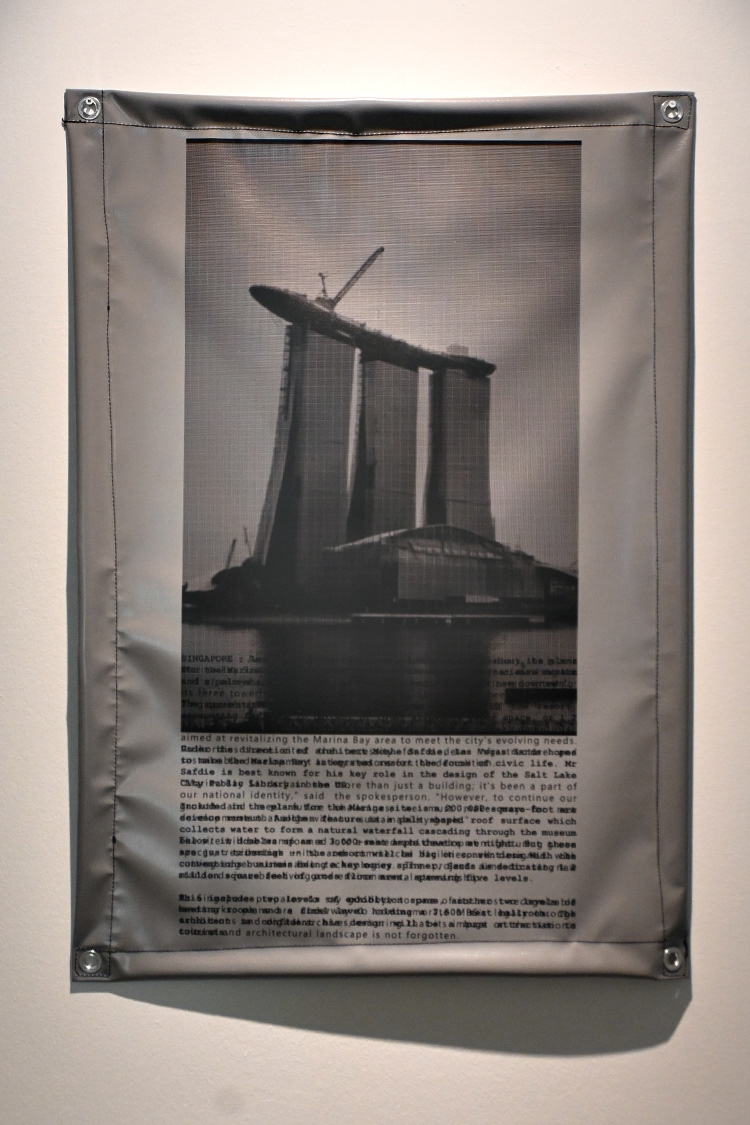
The Marina Bay Sands development, completed in stages from 2010 was perhaps the last time a single work of architecture captured the imagination, commentary, and discourse of Singapore. Its completion created an instant architecture landmark, surpassing the Merlion as the definitive visual representation of Singapore.
Generative digital intervention into archival photograph create an ambiguous image.
The overlaid text are derived from a newspaper article lauding the architecture of the towers, overlaid with a speculative text reporting on the demolition of the towers.
The act of demolition and construction, or creative destruction is blurred.
Generative digital intervention into archival photograph create an ambiguous image.
The overlaid text are derived from a newspaper article lauding the architecture of the towers, overlaid with a speculative text reporting on the demolition of the towers.
The act of demolition and construction, or creative destruction is blurred.